Engineering Note
Shaft Clamp With Keyway vs Without Keyway
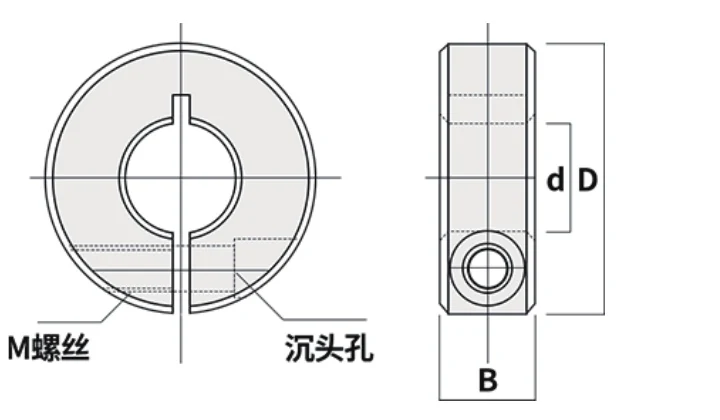
The standard EP-SCS shaft clamp is plain-bore, while keyway K dimensions are listed for most models from 10 mm bore upward. A keyway should be requested because the machine interface requires it, not because a keyed collar is automatically “better” than a plain one.
The correct choice depends on what the collar is expected to do and how the shaft itself is designed. A collar used only as an adjustable axial stop may not need a keyway, while a keyed assembly needs the mating key and shaft geometry to be defined together.
Plain-Bore Collar
A plain-bore collar uses the split clamp to grip around the shaft and can serve as a stop or locator when the machine design supports that role. The configuration is simple and avoids introducing a keyed feature that the shaft may not need.
For setup references and adjustable stops, the ability to loosen and reposition the collar can be more important than adding a keyway. The buyer should still confirm bore fit, envelope and screw access.
Keyed Collar
A keyed request adds an interface feature that must relate to the mating shaft and key. The K dimension shown in the EP-SCS chart is a collar-side reference, but it does not by itself define key width, depth, tolerance or the complete shaft-side geometry.
Send a shaft drawing or the relevant key/keyway dimensions with the RFQ. That prevents the collar from being quoted around an incomplete interface description.
Which EP-SCS Models List K?
| Model Range | Keyway Reference |
|---|---|
| EP-SCS06 / EP-SCS08 | No standard K value shown in the EP-SCS chart. |
| EP-SCS10–EP-SCS25 | K values listed by model; standard collar remains plain-bore. |
| EP-SCS30–EP-SCS60 | K values listed by model; larger keyed interfaces should still be checked with the mating shaft. |
When a Keyway May Be Unnecessary
If the collar is only establishing an axial reference and the machine does not require a keyed relationship, adding a keyway can introduce avoidable complexity. The plain-bore configuration keeps the interface focused on shaft diameter and clamping position.
Do not use a keyway request as a substitute for explaining the actual duty. If torque transmission or another functional responsibility is involved, describe that system requirement explicitly.
When to Send a Drawing
Send a drawing whenever the keyway must line up with an existing shaft feature, when the collar is part of a retrofit, or when the surrounding space is tight. Include the measured shaft, preferred EP-SCS model, quantity and the collar’s intended role in the assembly.
Ordering Checklist
- EP-SCS model or required bore.
- Shaft diameter/tolerance.
- Key width and shaft-side keyway geometry when applicable.
- Quantity and application.
- Maximum OD/width if the machine envelope is restricted.