Engineering Note
OEM Shaft Clamp Ordering Guide
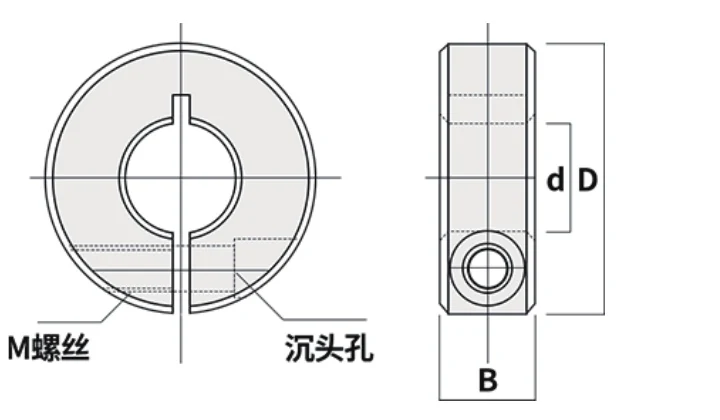
A useful shaft-clamp RFQ defines the interface and application well enough that both buyer and supplier are discussing the same part. For EP-SCS products, that means starting with shaft diameter and the standard d/D/B/M/W/K data, then adding the machine-specific information that a model number cannot capture.
The same approach also works when a listed bore does not fit the project and a non-standard option needs to be reviewed.
Start With the Standard EP-SCS Reference
If a standard model is close to the requirement, include its EP-SCS number and the target bore. This gives the enquiry a clear geometric reference and helps identify which surrounding dimensions may also need to change for a non-standard request.
If no standard model is relevant, begin with the shaft drawing instead of forcing the request into an arbitrary model code.
Define the Shaft
Provide the measured or drawing diameter, tolerance information when available and the condition of the shaft for replacement work. If the shaft is worn, coated or modified, note that condition so the fit question is not reduced to a nominal number.
Define the Available Envelope
State the maximum outside diameter and axial width if the machine space is restricted. Show nearby bearings, shoulders, couplings, pulleys, carriages and guards on a sketch when they control the collar position or screw access.
A custom bore that does not fit the available body envelope is not a useful solution, so these surrounding dimensions belong in the RFQ from the start.
Define the Keyway Completely
If a keyed collar is required, include the mating key and shaft-side keyway geometry. The EP-SCS K dimension is only a collar-side reference and cannot describe the complete keyed interface by itself.
Describe the Application Duty
State whether the collar is a setup reference, guide-shaft stop, paired locator, motor/drive reference or replacement component. Add repeated impact, meaningful axial demand, unusual environment or other application-critical conditions rather than expecting the bore size to communicate them.
List Documentation or Material Requirements
If the project requires a specific aluminum grade, surface finish, inspection document or compliance evidence, list it explicitly. That lets the quotation address the ordered configuration and avoids assumptions based on a generic collar description.
RFQ Data Pack
| Item | Example of Useful Information |
|---|---|
| Model / bore | EP-SCS20 or required 20 mm bore. |
| Shaft | Measured diameter, tolerance, surface condition. |
| Envelope | Maximum OD and axial width; screw-access direction. |
| Keyway | Mating key/shaft dimensions if required. |
| Application | Stop, locator, paired positioning, replacement, etc. |
| Duty/environment | Impact, contamination, humidity, temperature or other relevant condition. |
| Evidence | Drawing, photo or sample dimensions. |
| Commercial | Quantity and required documentation. |
Replacement Work
For a legacy machine, a clear photo plus bore/OD/width measurements is often more useful than an equipment model name. Include the old screw orientation and any shaft damage or wear visible after removal.
Send the Enquiry
Combine the information above into one RFQ and attach the drawing or photo when available. The goal is not to create a long specification for its own sake; it is to give enough interface data to decide whether a standard EP-SCS model, keyed configuration or non-standard option should be evaluated.