Engineering Note
Shaft Clamp Applications in CNC and Automated Machines
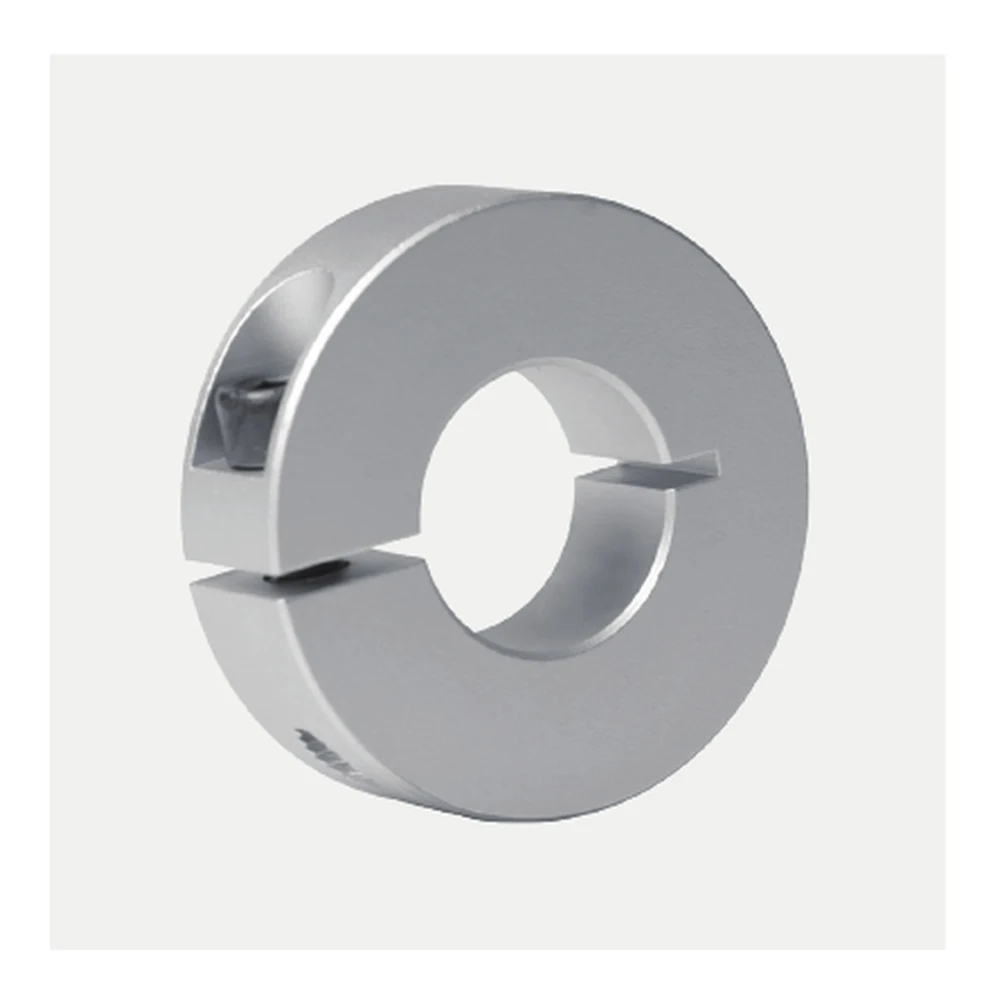
CNC machines and automated equipment use round shafts in guide, fixture, actuator and auxiliary mechanisms where a removable axial reference can simplify setup. A clamp-style shaft collar is useful in these roles because it can be positioned without relying on a set screw pressing directly into one point on the shaft.
The key is to distinguish a simple locator from a duty that involves repeated impact, high axial demand or another system function. The same nominal bore can appear in very different applications, so machine context matters.
1. Guide-Shaft End Stop
A collar can establish an end reference on a guide shaft when the moving carriage and other components have enough clearance. Check the full travel path, not only the final stop position, and decide whether the contact is an occasional setup limit or a repeated hard stop.
2. Fixture Setup Reference
On jigs and fixtures, a collar can mark a repeatable axial position that may need to be adjusted during commissioning. Plan the screw orientation so the setup team can loosen and reset the collar without dismantling nearby tooling.
3. Paired Axial Locator
Two collars can define an adjustable location window around another shaft-mounted component. The machine designer should specify the required clearance and ensure that the located component still has the bearing, support or torque-transmission functions it needs.
4. Motor or Actuator-Side Reference
A collar can sit near a pulley, coupling spacer or other shaft-mounted part as a position reference. Confirm that it does not interfere with the motor face, bearing area, coupling movement or guard and that the clamp screw remains serviceable.
5. Maintenance Replacement Stop
When replacing an unidentified collar, record bore, outside diameter, width and screw direction before removal. A photo of the surrounding assembly often reveals clearance constraints that are not obvious from the shaft diameter alone.
Selection Checks for CNC and Automation
| Check | Question |
|---|---|
| Shaft | What is the measured diameter at the collar location? |
| Travel | Does any moving component enter the collar or screw envelope? |
| Service | Can the clamp screw be reached after the machine is assembled? |
| Duty | Is this a locator, setup reference or repeated-impact stop? |
| Replacement | Do OD, width and keyway match the existing machine interface? |
Model Selection
After measuring the shaft, compare the matching EP-SCS model’s outside diameter and width with the machine envelope. Smaller sizes support compact axes, while larger models require more deliberate clearance and service space.
If the application has a keyway, unusual environment or performance-critical requirement, include that detail with the RFQ rather than treating the collar as a bore-only component.